Earache
Earache is a very common problem, especially in young children, but it can also affect adults. It can be painful but is not usually a sign of anything more serious and will often get better in a few days. Although young children with earache tend to be fussy and irritable whilst tugging their ears.
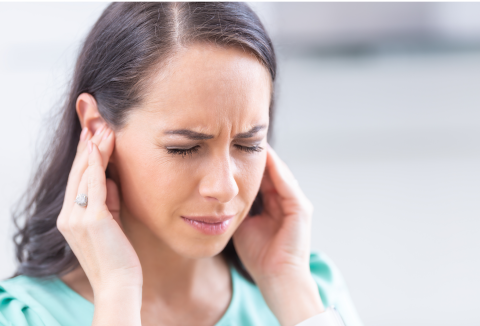
What can cause earache in adults?
The most common cause of earache is the build-up of wax. Normally, your ears can clean themselves out, but occasionally there may be a large amount of wax in your ear that gets stuck and gradually builds up. This can cause ear pain and possibly temporary hearing loss.
Your throat and ears are very close together, so if there is an issue with one, it can affect the other. This is the case with tonsillitis. When your tonsils swell up, the attacking bacteria can spread to your ear, causing uncomfortable ear pain. This should, however, ease as you recover.
Glue ear causes earache in a similar way to earwax. It is the build-up of fluid deep inside the ear that can make your ear feel blocked and hearing to sound like you’re underwater. This may occur after swimming or a shower. It’s best to avoid getting water directly into your ear to minimise the risk of glue ear.
Similar to how tonsillitis affects your ears, arthritis in the jaw can also cause earache. This is known as temporomandibular joint pain. Teeth grinding can cause similar issues.
Another mouth condition that can cause ear pain is dental abscesses and tooth infections, a bacterial infection that can cause pain and throbbing in the mouth that can sometimes spread to the ear. You will need urgent care from your dentist if you’re experiencing symptoms of an abscess. On the other hand, an ear infection can also cause tooth and jaw pain.
A burst or perforated eardrum is when something causes a hole or tear in your eardrum, the thin tissue separating your outer ear from your inner ear. When this bursts, possibly from sudden changes in air pressure (like on a plane) or loud noises, it can leave you with ear pain, dizziness, tinnitus, and hearing loss. Burst eardrums take about two months to heal.
What can cause earache in children?
If you see your baby rubbing their ear, it could be a sign that they’re teething. Teeth coming through for the first time can cause discomfort in the mouth and surrounding areas, such as the ear. But this should pass when their teeth come through.
Children get into all sorts of predicaments, one being getting objects lodged in places they shouldn’t be, such as the ear. If there is something stuck in your child’s ear, don’t try to remove it. It might come out naturally, or your GP may have to remove it via ear irrigation.
Ear infections are especially common in children and can cause symptoms such as high temperature, nausea, and pain or irritation in and around the ear. They are caused by bacteria or viruses getting into the middle of the ear and around the eardrum. An ear infection will usually go away on its own in a few days.
How to treat an earache
Painkillers
Painkillers like paracetamol and ibuprofen will help ease the pain of an earache and lower your temperature if you have an infection. You can access these at your local pharmacy, along with some professional advice.
Damp cloth
Using a damp cloth can soothe your ear and help the infection go away. The moisture can soften anything inside the ear causing disturbances, making it easier for the infection to come out naturally.
Ear drops
Your local pharmacist may recommend acidic eardrops to stop bacteria and fungus from spreading and worsening, helping to make your ear infection go away.
Antibiotics
Antibiotics usually aren’t recommended if you have an earache, but your GP may prescribe antibiotics if you have been suffering from an earache or an ear infection for a few days, or if there are other complications such as a weakened immune system (e.g. being on chemotherapy).
What not to do when you have an earache
Use cotton buds
Cotton buds are not to be used to remove earwax. Attempting to insert anything into your ear at home is not advised, as you’re most likely just pushing the wax even further, making it more likely to cause more earache and hearing loss, and making it more difficult to remove.
Ear candling
Ear candling is the process of attempting to remove earwax via the heat of a candle, which is thought to create a vacuum that pulls out earwax. However, there is no scientific proof that this process works, and using a flame for medical purposes seems rather medieval if you ask us!
Spray water
Spraying water, especially at high pressure, directly into your ear is unlikely to be an effective way to remove earwax. If anything, it’s more likely to cause glue ear and increase the pain.
How can you prevent earache?
Avoid having foreign objects close to your ears to both avoid them getting lodged and also to avoid any unwanted bacteria getting in your ears and increasing the risk of infection.
Ensure you wash your outer ear in the shower to kill off any bacteria before it causes any trouble, but avoid getting the water directly into your ear as that can cause more issues.
Smoking, or simply being around smoke, doesn’t do your ears any favours. Smoking can irritate and swell up the tubes that connect your nose to your middle ear, which can bring on some nasty pain and aching! So if you can, stop smoking.
Enjoy blasting music from your headphones? Maybe you should turn it down a tad. Long exposure to loud noises can risk damaging your eardrums and causing temporary, or possibly permanent, hearing loss.
The sharp chill of the winter can take its toll on our exposed ears. Covering them up with a warm hat, earmuffs, or your hood keeps them protected in the frosty season. Just make sure that you keep your hats and earmuffs clean and dry to minimise bacteria.
You use your hands all the time, so they get covered in bacteria from things you touch, which can easily be transferred to your face and ears. Washing your hands after you go to the toilet or touch food and animals makes sure that any unwanted germs don’t find their way into your ears.
Our pharmacy team can advise you on the best treatments available for earache and determine if you need to see your GP.
Got earache? We can help!
We have over 300 pharmacies across the UK, find your nearest one using our pharmacy finder
With the NHS Pharmacy First Service, if you live in England, you can now book an appointment to speak to our pharmacist
We have a wide range of services available, from medication management to vaccinations